Showing posts with label The Memoirs of Billy Shears. Show all posts
Showing posts with label The Memoirs of Billy Shears. Show all posts
Wednesday, 21 February 2018


Monday, 19 February 2018
Sunday, 11 February 2018

Thursday, 8 February 2018
The Beatles - Paul Is Dead: Replaced by William Campbell (Nothing Is Real) by Jairo Parra - Part 1 (video)
Was Paul McCartney replaced by William Campbell and took his place after his death in 1966? Find out if he was replaced or not.
Tuesday, 6 February 2018
The True Story Of Paul McCartney
The Beatles - 60IF: The True Story of Paul McCartney's Death in 1966

In Loving Memory of Paul McCartney. Sunday, 11 September 1966, 11.50 P.M
The evidents of Paul McCartney's Aston Martin in an accident of car crash in September, 11 1966.

Picture 1

Picture 2

Paul's dead body in Magical Mystery Tour 1967

Real Paul Dead Body

Paul McCartney Dead The Great Hoax
WEBMASTER'S NOTE: The following is a deathbed confession of George Harrison concerning some very morbid and disturbing facts about Paul McCartney and the Beatles. Obviously, because of the nature of this information, I cannot reveal my name, nor can I tell you how this written confession landed in my hands. The important thing to note is that George specifically requested that this information be released to the public in time for the real Paul McCartney's birthday on June 18th of this year, the day on which Paul would have been 60...IF he were alive.
Sunday, September 11th, 1966, Evening
Brian and Paul were returning from their trip in good spirits. It had been a wonderful time. After John's notorious phrase which had instigated the storm in the world against the Beatles, everything seemed to be finally returning to normal.
And Paul had had a sudden burst of extraordinary creativity over a very short period of time, and things were looking up.
It had been a typically seasonal rainy day. At a normally quiet intersection, a van suddenly cut across the street, blocking the car Brian and Paul were in. The car didn't quite stop in time and hit the van, but not seriously enough to do any real damage. They expected to discuss what had happened with the occupants of the other vehicle, but instead men dressed in black appeared from the van and grabbed Brian, Paul and one of the girls who happened to be with them at the time and forced them into another car that had turned up in the meantime. The second girl who was with them, however, had the presence of mind to run away.
The morning afterwards, not knowing what had happened, we tried to call Brian and Paul but strangely we couldn't get hold of them. We retraced their steps through our common friends but nobody had seen or heard from them. We were on the telephone all day.
The next day the police phoned to tell us that they had a girl with them confirming that Brian and Paul had been kidnapped. Ringo was the first one to arrive where the kidnapping had taken place; the vehicles were empty. The girl told us what had happened. We began to panic. John became hysterical and we didn't know what to think or what to do. But we were able to suppress the story from the Wednesday newspapers thanks to some acquaintances of ours. We had directly contacted the intelligence service who understood the gravity of the situation and the social ramifications if word got out. They told us that they would take care of everything. All we had to do was to continue our daily routine and keep all our previously appointed business engagements. We waited for the kidnappers to contact us with a ransom demand of some sort. Time passed and nothing happened. As more days passed, our apprehension grew.
It was the stupid bloody Tuesday of the following week when we received the call, but not the one we had been waiting for. We were called out in order to identify Paul's body. At the time John was in Paris and George was in India. They immediately returned home. Paul was found at the foot of a hill, a little distance from a white Volkswagen.
He was in a ghastly state. He had been dead for a while and beasts had begun to eat at him; his lips looked as if they had been torn by some animal. The left side of his face had also been torn to pieces and the whole of his ear had been bitten off. Those wretches had tried to burn him to eliminate the evidence, but only the legs had managed to be burnt before the rain extinguished the fire.

The mangled corpse of Paul McCartney
(a frame from the "Free as a Bird" video)
When we arrived there was a line of police officers blocking us while a crowd of men in shirts were retrieving material for further investigation. They were so oblivious to the grief we felt that one of them had the audacity to exclaim right in front of the Paul's dead body: "Look ...it seems like a walrus!"
Well, with his teeth hanging outside of his eaten-up lips and with a shiny swollen ear and dripping wet he really did look like a walrus. John confronted the man who had spoken so insensitively and they began to brawl. He had to be pulled away as he howled: "I.., I am the walrus ..not him, I.., I am the walrus!"
Brian was found, two days later, in a car which had been pushed over a cliff and set alight. We were desperately aware that Paul, Brian and the Beatles were finished. But our anger made us think: we would not stop, we would not give up. Paul had left a lot of material that was yet to be published. We met: nobody had to know and Paul could still be kept alive. The only question was how.
It was announced to the press the Beatles' wished not to play any more concerts and only work in the recording studio, which gave us a bit of breathing space. It was suggested to us from the same intelligence service department what to do: they had in their secret labs at their disposal cosmetic surgeons with the technical skills to recreate perfect doubles but in exchange for their help we had to keep quiet about what had happened; the penalty for refusing to remain silent was death.
We found a look-alike for Brian and a few contenders for Paul but the main problem was to find one with the most similar voice possible. We had to check out a number of imitators (and there were many at that time) and find one with a face compatible with Paul's. We found a boy with a beautiful voice that was able to imitate Paul in a cogent manner but his face presented problems that would not be compliant with the cosmetic surgery needed.
We decided however to use him to complete the songs for the album that was in current preparation so it could be released as quickly as possible in order to divert the suspicions and rumours that had begun to hound us. When we had all but given up the right man was found.
His name was William Sheppard and he had formerly been an Ontario police officer. He was also a musician who was familiar with, and fond of, the music of the Beatles. He had a beautiful voice but the quality of his Paul voice imitation was not as good as that of the boy who had already been working with us; however his face as presented was wonderfully compatible as regards to the profile and jaw, two key factors in determining the correct candidate that the cosmetic surgeons could use.
Despite this, there were a number of differences:
Paul was far-sighted
Bill was near-sighted
Paul had hair that naturally went from left to right
Bill had (has) hair that went naturally from right to left
Paul had a round face
Bill had a long face
Paul was left handed
Bill was right handed
In an irony of fate the "substitutes" had inverted heights: The substitute of Paul was taller and the counterpart of Brian was smaller. For this, they suggested tricks that we were to adopt when we were filmed together.
When Bill was in the police he was nicknamed (playing on his last name) "Sgt.Pepper" because he liked to drink and his nose, a bit rounded, was often red. After plastic surgery John gave Bill the nickname of "Faul". Our introduction to Faul was the national hymn at the start of "All You Need Is Love", and "Sgt.Pepper" was the first album with the photos of Faul even though they needed to be retouched.
This album cover is full of messages. Many of those that you have discovered are true, others are not, others have been badly interpreted.
One of the most important is "Welcome The Rolling Stones" written with blood. We hadn't had news about who it was that had killed Paul and John was sure that his murder had been commissioned by the Rolling Stones as they were well-known as delinquents. The crowd is made up of those that Paul would have wanted at his funeral.
The following facts are true:
In the lowest row of flowers the word "Paul?" is written.
The band had its name changed; they were no longer called "The Beatles" but only "Beatles".
Most effectively in the bass drum there are mirrored words: it's the date of Brian and Paul's disappearance : 1ONE IX (September 11).
The references that you found on the back of the cover are all correct; George points out the last completed song sung by Paul: "She's Leaving Home".
Faul had an older appearance in respect to Paul and so to confuse the issue we all grew beards and mustaches so we would all seem "a bit older". Despite this, Faul wore contact lenses to darken his natural green color eyes. They were quite discreet but someone noticed that something had changed: the surgeons had forgotten to duplicate the small ditching that Paul had on his chin. This was retouched in the photos. Also Faul had to endure other plastic surgery sessions with some improvement although the result still wasn't perfect. The surgeons altered his mouth again: his teeth and his chin were fully rebuilt, his nose was made shorter and thinner, even his hands were reshaped and the cheeks (and chin) had to be increased with time-limited botuline injections when we were in public or when any photos were taken because his face was also a lot thinner than Paul's.
In spite of these operations today's traces of the old scar can still be seen on Faul's chin. The nose does not look the same overall: Faul's is smaller and is not shaped the same. But above all the distance between the eyes is completely different: Paul's were much wider.
And the old Faul - what happened to him? That's right, he's the one in the photo in the left bottom side of the White Album poster. To divert suspicion the photo was mirror printed. Faul slowly learned to play left handed and to sing better.
The counterpart of Brian could not hold up the role for very long: we had to get him out of the picture as quickly as possible while we worked on the legal aspects of how to manage the musical material that Paul had left to us, and so Apple was born. Here also John wanted to leave a strong reference to Paul: for "Apple Corp Ltd" read "A Paul Corp Ltd".
The trip in India was our attempt to put Paul's soul into Faul's body but of course it didn't succeed; yes, I know, it was a crazy idea, but we were almost going out of our heads with grief.
After some time we discovered that it was Brian and NOT Paul who was the main target of the kidnappers.
The game was initially liked by John, but as time went by the memory of Paul replaced his happiness and the idea to not let the Beatles die or allow those who had killed Brian and Paul to win. Without our knowing it, he inserted phrases into the tracks which whispered the truth. He risked wrecking everything but the phrases were replaced in the next copies of the albums. In spite of this John succeeded with a maximum amount of astuteness to publish the "White Album" poster which actually is the "White Book" of the whole matter.
When the material left by Paul was all published John did not find any reason to continue the Beatles, but he didn't want them to fold completely until he had inserted all the clues in the songs so that everything that had happened could be reconstructed.
Also, the end of Faul's role was supposed to coincide with the end of the Beatles but Faul didn't respect the contract that had been made and, feeling he would be strongly protected by the secret service, published his first solo album which had actually been prepared by other musicians. So we were tempted in the last album to reveal the truth but corporate managers and lawyers prevented it. The reference "28IF" on the Volksvagen plate in the "Abbey Road" cover is correct because the album was to suppose to come out a year later than it actually did, but there was a fear that some of the truth would come out prematurely so it was released earlier.
There are references in places other than Beatle albums or songs; there were a few friends in the music business and entertainment industry in general who were aware of our dilemma, and wrote disguised songs of support and condolence, most notably Paul Simon when he wrote "Mrs. Robinson", a poetic ode to Jane Asher, in 1968. Listen closely to the popular music of that era - the musicians of the world (who knew) were sympathetic.
After the Beatles' broke up, John went to America to find Paul's killers. During the second half of 1967 he had discovered they were members of the KKK. After years of personal investigation John was getting close, very close to the truth. He left Yoko and a few months later he was assassinated because he had requested not to have daily body guards with him anymore. At last The Friends were together again forever.
In spite of his betrayal, we should give Faul an immense "thank you", because he sacrificed his life for the Beatles. While this ruse has been financially successful to him, he has felt out of place quite a bit and (let the truth be known) many clues have actually been inserted by him! Unfortunately, after the Beatles, he merely became a puppet in Linda's hands because she wanted to become a rockstar at any cost. But in the end, despite it all, he became a very small McCartney or perhaps slightly better than small.
Dedicated to all those that helped keep this story alive until today.
Sources from :-
Paul McCartney Vs Faul McCartney 2, Forensic Voice Comparison 2 (Use Headphones)

False Rumour

Is Paul Dead?

McCartney Dead

Is Beatle Paul McCartney Dead?

By The Numbers (666)

By The Numbers : George Harrison

By The Numbers : Harrison Attacked at Home

Paul McCartney Really Is Dead : The Last Testament of George Harrison?

Dick Cavett (Television Host)
Sources from :-
Monday, 5 February 2018
The Beatles - The FAUL GUY (Paul 1967)

Who Is William Shepherd?

"This is our true story as we told it to Billy Shepherd"

Bill Shepherd as Vivian Stanshall

Bill Shepherd's Transformation

Shepherd / James McCartney

History of The Beatles with the replacement of Paul McCartney to Bill Shepherd a.k.a Faul McCartney - Part 1

History of The Beatles with the replacement of Paul McCartney to Bill Shepherd a.k.a Faul McCartney - Part 2
Sources from :-

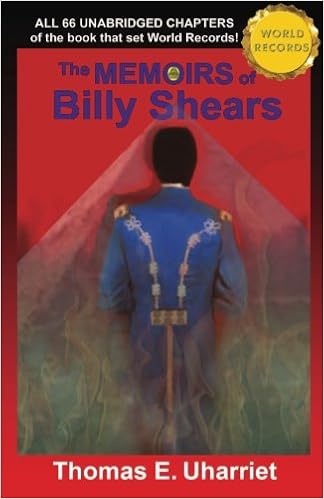
The Memoirs of Billy Shears
"Ringo Says Paul DIED in 1966"
After a supposed car accident in '66 the Beatles never played 'live' again on stage in America - or in public anywhere else really. Why would a #1 band hide out at the top of their career, change their very successful music style and divert into strangeness and secrecy?
Regardless, here's a in "Remembrance to Paul" who'd be 70 this year. Hope you like the show.
Those marked with * are the ones I got most of my show content from.
* http://www.youtube.com/user/beat68 "The Beatles Come to town '68"
* http://plasticmacca.blogspot.com youtube.com/user/faulconandsnowjob
Sadder songs today: Researchers say modern music has lost the 'feelgood factor'
"As a result, unambiguously uplifting songs like the Beatles' Help! or She Loves You are few and far between."
Sunday, 4 February 2018
The Beatles - Ringo Starr: The Real Paul McCartney Died In 1966! Illuminati COVER UP! (video)

Ringo : He was the drummer
Ringo Says Paul DIED in 1966

FORMER BEATLE RINGO STARR CLAIMS THE “REAL” PAUL MCCARTNEY DIED IN 1966 AND WAS REPLACED BY LOOK-ALIKE
VIA|The former drummer of the Beatles, Ringo Starr, surprised the world this morning during an interview in his luxurious Californian residence, when he admitted that the 45-year old rumors about the alleged death of Paul McCartney in 1966 were actually true.
In an exclusive interview with the Hollywood Inquirer, Mr. Starr explained that the “real” Paul McCartney had died in a car crash on November 9 1966, after an argument during a Beatles’ recording session. To spare the public from grief, the Beatles replaced him with a man named William Shears Campbell, who was the winner of a McCartney look-alike contest and who happened to have the same kind of jovial personality as Paul.
“When Paul died, we all panicked!” claims Ringo, obviously very emotional. “We didn’t know what to do, and Brian Epstein, our manager, suggested that we hire Billy Shears as a temporary solution. It was supposed to last only a week or two, but time went by and nobody seemed to notice, so we kept playing along. Billy turned out to be a pretty good musician and he was able to perform almost better than Paul. The only problem was that he couldn’t get along with John, at all.”
William Shears Campbell, better known as Billy Shears, does indeed “disappear ” from records in 1966 and traces of him can be found after Paul’s alleged death.

These pictures from 1966 show the great resemblance between Paul McCartney on the left, and William Shears Campbell on the right, at the time of McCartney’s alleged death.
Mr. Starr alleges that the group did send out a lot of hidden messages through the years to prepare the population for the truth.
He notably says that the entire Sgt. Pepper’s Lonely Hearts Club Band album was awash with Paul-is-dead clues: the Beatles had indeed officially formed a “new” band featuring a “fictional” member named Billy Shears, which happened to be the actual name of Paul’s replacement.
“We felt guilty about the deception” added Ringo Starr. “We wanted to tell the world the truth, be we were afraid of the reactions it would provoke. We thought the whole planet was going to hate us for all the lies we had told, so we kept lying but sending subtle clues to relieve our cousciousness. When the first rumors finally began about the whole thing, we felt very nervous and started fighting a lot with each other. At some point, it was too much for John and he decided to leave the band.”
Ringo Starr claims that he finally decided to tell the truth, because he was afraid that it was going to die with him. At age 74, he is the only other surviving member of the famous band besides Paul McCartney, and he was afraid the deception would never be revealed.
According to Ringo Starr, the cover of the Abbey Road album was a hidden message to the world, symbolizing a funeral procession. John Lennon, dressed in white, symbolizes the clergyman. Ringo Starr, dressed in black, symbolizes the undertaker. George Harrison, in denim jeans and shirt, symbolizes the gravedigger and McCartney, barefoot and out of step with other members of the band, symbolizes the corpse.
The rumors of Paul’s death began more than 45 years ago, but had always been dismissed as nonsense by the band and its entourage. In September 1969, American college students published a series of articles in which they claimed that clues to McCartney’s death could be found among the lyrics and artwork of the Beatles’ recordings. Clue-hunting rapidly proved infectious, and within a few weeks, it had become an international phenomenon. Rumours only declined after a contemporary interview with McCartney was published in Life magazine in November 1969.
Neither Paul McCartney nor anyone from his entourage have commented Ringo Starr’s declaration yet, but the interview has already provoked a lot of reactions around the world. Journalists and paparazzis from around the world have surrounded the residence of the musician only minutes after the interview was broadcasted and are awaiting for the star to comment the allegations.
The British MI5 also announced an investigation to determine if an impostor could have indeed posed for 48 years as the Member of the Order of the British Empire, Sir James Paul McCartney, during official ceremonies involving Queen Elizabeth II.
http://asheepnomore.net/2015/05/31/ringo-says-paul-died-in-1966/
The Beatles - Paul McCartney Was Replaced in 1966 (video)

Original Picture of William Shears Campbell (figure that took place for the replacement of Paul McCartney after 1966. Also known as Paul 1967 or Faul McCartney. His other beatles bandmate call him, Bill or Billy Shears)
Saturday, 3 February 2018
The Beatles - Paul McCartney is dead - Blood test proved you were fooled! (video)
Other Information :-
Paul Is Dead: Replaced by William Campbell (Nothing Is Real) by Jairo Parra
Monday, 29 January 2018
Tuesday, 23 January 2018
The Beatles - Sgt. Pepper's Lonely Hearts Club Band (audio)
The Beatles Sgt Pepper's Lonely Hearts Club Band (50th Anniversary Edition) (Full Album)
THE BEATLES - SGT. PEPPER'S LONELY HEARTS CLUB BAND (1967) - (for mobile users)
00:00 Sgt. Pepper's Lonely Hearts Club Band
02:02 With A Little Help From My Friends
04:47 Lucy In The Sky With Diamonds
08:15 Getting Better
11:02 Fixing A Hole
13:39 She's Leaving Home
17:05 Being For The Benefit Of Mr. Kite
19:45 Within You Without You
24:51 When I'm Sixty-Four
27:31 Lovely Rita
30:18 Good Morning Good Morning
32:51 Sgt. Pepper's Lonely Hearts Club Band (Reprise)
34:11 A Day In The Life
Description from https://en.wikipedia.org/wiki/Sgt._Pepper's_Lonely_Hearts_Club_Band
This article is about the 1967 album. For other uses, see Sgt. Pepper's Lonely Hearts Club Band (disambiguation).
Sgt. Pepper's Lonely Hearts Club Band is the eighth studio album by English rock band the Beatles. Released on 26 May 1967 in the United Kingdom[nb 1] and 2 June 1967 in the United States, it was an immediate commercial and critical success, spending 27 weeks at the top of the UK albums chart and 15 weeks at number one in the US. On release, the album was lauded by the vast majority of critics for its innovations in music production, songwriting and graphic design, for bridging a cultural divide between popular music and legitimate art, and for providing a musical representation of its generation and the contemporary counterculture. It won four Grammy Awards in 1968, including Album of the Year, the first rock LP to receive this honour.
In August 1966, the Beatles permanently retired from touring and began a three-month holiday from recording. During a return flight to London in November, Paul McCartney had an idea for a song involving an Edwardian era military band that would eventually form the impetus of the Sgt. Pepper concept. Sessions for the album began on 24 November in Abbey Road Studio Two with two compositions inspired by their youth, "Strawberry Fields Forever" and "Penny Lane", but after pressure from EMI, the songs were released as a double A-side single and were not included on the album.
In February 1967, after recording the title track "Sgt. Pepper's Lonely Hearts Club Band", McCartney suggested that the Beatles should release an entire album that would represent a performance by the fictional Sgt. Pepper band. This alter ego group would give them the freedom to experiment musically. During the recording sessions, the band furthered the technological progression they had made with their 1966 album Revolver. Knowing they would not have to perform the tracks live, they adopted an experimental approach to composition and recording on songs such as "With a Little Help from My Friends", "Lucy in the Sky with Diamonds" and "A Day in the Life". Producer George Martin and engineer Geoff Emerick's innovative recording of the album included the liberal application of sound shaping signal processing and the use of a 40-piece orchestra performing aleatoric crescendos. Recording was completed on 21 April 1967. The cover, depicting the Beatles posing in front of a tableau of celebrities and historical figures, was designed by the British pop artists Peter Blake and Jann Haworth.
Sgt. Pepper is regarded by musicologists as an early concept album that advanced the use of extended form in popular music while continuing the artistic maturation seen on the Beatles' preceding releases. It has been described as one of the first art rock LPs, aiding the development of progressive rock, and credited with marking the beginning of the album era. An important work of British psychedelia, the album incorporates a range of stylistic influences, including vaudeville, circus, music hall, avant-garde, and Westernand Indian classical music. In 2003, the Library of Congress placed Sgt. Pepper in the National Recording Registry, honouring the work as "culturally, historically, or aesthetically significant".[2] That same year, Rolling Stone magazine ranked it number one in its list of the "500 Greatest Albums of All Time". As of 2011, it has sold more than 32 million copies worldwide, making it one of the best-selling albums in history. Professor Kevin J. Dettmar, writing in the Oxford Encyclopedia of British Literature, described it as "the most important and influential rock and roll album ever recorded".[3]

BILLY PEPPER & THE PEPPERPOTS front page album

BILLY PEPPER & THE PEPPERPOTS back album

1. Descriptions of I ONEI X

2. Another Descriptions of I ONEI X

3. The descriptions of the John Lennon Date Clue Confusion
Sources from :-
Continues your readings in the articles below. It is related to the case of the death of Paul McCartney 1966.
60IF: The True Story of Paul McCartney's Death in 1966
WEBMASTER'S NOTE: The following is a deathbed confession of George Harrison concerning some very morbid and disturbing facts about Paul McCartney and the Beatles. Obviously, because of the nature of this information, I cannot reveal my name, nor can I tell you how this written confession landed in my hands. The important thing to note is that George specifically requested that this information be released to the public in time for the real Paul McCartney's birthday on June 18th of this year, the day on which Paul would have been 60...IF he were alive.
Sunday, September 11th, 1966, Evening
Brian and Paul were returning from their trip in good spirits. It had been a wonderful time. After John's notorious phrase which had instigated the storm in the world against the Beatles, everything seemed to be finally returning to normal.
And Paul had had a sudden burst of extraordinary creativity over a very short period of time, and things were looking up.
It had been a typically seasonal rainy day. At a normally quiet intersection, a van suddenly cut across the street, blocking the car Brian and Paul were in. The car didn't quite stop in time and hit the van, but not seriously enough to do any real damage. They expected to discuss what had happened with the occupants of the other vehicle, but instead men dressed in black appeared from the van and grabbed Brian, Paul and one of the girls who happened to be with them at the time and forced them into another car that had turned up in the meantime. The second girl who was with them, however, had the presence of mind to run away.
The morning afterwards, not knowing what had happened, we tried to call Brian and Paul but strangely we couldn't get hold of them. We retraced their steps through our common friends but nobody had seen or heard from them. We were on the telephone all day.
The next day the police phoned to tell us that they had a girl with them confirming that Brian and Paul had been kidnapped. Ringo was the first one to arrive where the kidnapping had taken place; the vehicles were empty. The girl told us what had happened. We began to panic. John became hysterical and we didn't know what to think or what to do. But we were able to suppress the story from the Wednesday newspapers thanks to some acquaintances of ours. We had directly contacted the intelligence service who understood the gravity of the situation and the social ramifications if word got out. They told us that they would take care of everything. All we had to do was to continue our daily routine and keep all our previously appointed business engagements. We waited for the kidnappers to contact us with a ransom demand of some sort. Time passed and nothing happened. As more days passed, our apprehension grew.
It was the stupid bloody Tuesday of the following week when we received the call, but not the one we had been waiting for. We were called out in order to identify Paul's body. At the time John was in Paris and George was in India. They immediately returned home. Paul was found at the foot of a hill, a little distance from a white Volkswagen.
He was in a ghastly state. He had been dead for a while and beasts had begun to eat at him; his lips looked as if they had been torn by some animal. The left side of his face had also been torn to pieces and the whole of his ear had been bitten off. Those wretches had tried to burn him to eliminate the evidence, but only the legs had managed to be burnt before the rain extinguished the fire.
The mangled corpse of Paul McCartney
(a frame from the "Free as a Bird" video)
When we arrived there was a line of police officers blocking us while a crowd of men in shirts were retrieving material for further investigation. They were so oblivious to the grief we felt that one of them had the audacity to exclaim right in front of the Paul's dead body: "Look ...it seems like a walrus!"
Well, with his teeth hanging outside of his eaten-up lips and with a shiny swollen ear and dripping wet he really did look like a walrus. John confronted the man who had spoken so insensitively and they began to brawl. He had to be pulled away as he howled: "I.., I am the walrus ..not him, I.., I am the walrus!"
Brian was found, two days later, in a car which had been pushed over a cliff and set alight. We were desperately aware that Paul, Brian and the Beatles were finished. But our anger made us think: we would not stop, we would not give up. Paul had left a lot of material that was yet to be published. We met: nobody had to know and Paul could still be kept alive. The only question was how.
It was announced to the press the Beatles' wished not to play any more concerts and only work in the recording studio, which gave us a bit of breathing space. It was suggested to us from the same intelligence service department what to do: they had in their secret labs at their disposal cosmetic surgeons with the technical skills to recreate perfect doubles but in exchange for their help we had to keep quiet about what had happened; the penalty for refusing to remain silent was death.
We found a look-alike for Brian and a few contenders for Paul but the main problem was to find one with the most similar voice possible. We had to check out a number of imitators (and there were many at that time) and find one with a face compatible with Paul's. We found a boy with a beautiful voice that was able to imitate Paul in a cogent manner but his face presented problems that would not be compliant with the cosmetic surgery needed.
We decided however to use him to complete the songs for the album that was in current preparation so it could be released as quickly as possible in order to divert the suspicions and rumours that had begun to hound us. When we had all but given up the right man was found.
His name was William Sheppard and he had formerly been an Ontario police officer. He was also a musician who was familiar with, and fond of, the music of the Beatles. He had a beautiful voice but the quality of his Paul voice imitation was not as good as that of the boy who had already been working with us; however his face as presented was wonderfully compatible as regards to the profile and jaw, two key factors in determining the correct candidate that the cosmetic surgeons could use.
Despite this, there were a number of differences:
Paul was far-sighted
Bill was near-sighted
Paul had hair that naturally went from left to right
Bill had (has) hair that went naturally from right to left
Paul had a round face
Bill had a long face
Paul was left handed
Bill was right handed
In an irony of fate the "substitutes" had inverted heights: The substitute of Paul was taller and the counterpart of Brian was smaller. For this, they suggested tricks that we were to adopt when we were filmed together.
When Bill was in the police he was nicknamed (playing on his last name) "Sgt.Pepper" because he liked to drink and his nose, a bit rounded, was often red. After plastic surgery John gave Bill the nickname of "Faul". Our introduction to Faul was the national hymn at the start of "All You Need Is Love", and "Sgt.Pepper" was the first album with the photos of Faul even though they needed to be retouched.
This album cover is full of messages. Many of those that you have discovered are true, others are not, others have been badly interpreted.
One of the most important is "Welcome The Rolling Stones" written with blood. We hadn't had news about who it was that had killed Paul and John was sure that his murder had been commissioned by the Rolling Stones as they were well-known as delinquents. The crowd is made up of those that Paul would have wanted at his funeral.
The following facts are true:
In the lowest row of flowers the word "Paul?" is written.
The band had its name changed; they were no longer called "The Beatles" but only "Beatles".
Most effectively in the bass drum there are mirrored words: it's the date of Brian and Paul's disappearance : 1ONE IX (September 11).
The references that you found on the back of the cover are all correct; George points out the last completed song sung by Paul: "She's Leaving Home".
Faul had an older appearance in respect to Paul and so to confuse the issue we all grew beards and mustaches so we would all seem "a bit older". Despite this, Faul wore contact lenses to darken his natural green color eyes. They were quite discreet but someone noticed that something had changed: the surgeons had forgotten to duplicate the small ditching that Paul had on his chin. This was retouched in the photos. Also Faul had to endure other plastic surgery sessions with some improvement although the result still wasn't perfect. The surgeons altered his mouth again: his teeth and his chin were fully rebuilt, his nose was made shorter and thinner, even his hands were reshaped and the cheeks (and chin) had to be increased with time-limited botuline injections when we were in public or when any photos were taken because his face was also a lot thinner than Paul's.
In spite of these operations today's traces of the old scar can still be seen on Faul's chin. The nose does not look the same overall: Faul's is smaller and is not shaped the same. But above all the distance between the eyes is completely different: Paul's were much wider.
And the old Faul - what happened to him? That's right, he's the one in the photo in the left bottom side of the White Album poster. To divert suspicion the photo was mirror printed. Faul slowly learned to play left handed and to sing better.
The counterpart of Brian could not hold up the role for very long: we had to get him out of the picture as quickly as possible while we worked on the legal aspects of how to manage the musical material that Paul had left to us, and so Apple was born. Here also John wanted to leave a strong reference to Paul: for "Apple Corp Ltd" read "A Paul Corp Ltd".
The trip in India was our attempt to put Paul's soul into Faul's body but of course it didn't succeed; yes, I know, it was a crazy idea, but we were almost going out of our heads with grief.
After some time we discovered that it was Brian and NOT Paul who was the main target of the kidnappers.
The game was initially liked by John, but as time went by the memory of Paul replaced his happiness and the idea to not let the Beatles die or allow those who had killed Brian and Paul to win. Without our knowing it, he inserted phrases into the tracks which whispered the truth. He risked wrecking everything but the phrases were replaced in the next copies of the albums. In spite of this John succeeded with a maximum amount of astuteness to publish the "White Album" poster which actually is the "White Book" of the whole matter.
When the material left by Paul was all published John did not find any reason to continue the Beatles, but he didn't want them to fold completely until he had inserted all the clues in the songs so that everything that had happened could be reconstructed.
Also, the end of Faul's role was supposed to coincide with the end of the Beatles but Faul didn't respect the contract that had been made and, feeling he would be strongly protected by the secret service, published his first solo album which had actually been prepared by other musicians. So we were tempted in the last album to reveal the truth but corporate managers and lawyers prevented it. The reference "28IF" on the Volksvagen plate in the "Abbey Road" cover is correct because the album was to suppose to come out a year later than it actually did, but there was a fear that some of the truth would come out prematurely so it was released earlier.
There are references in places other than Beatle albums or songs; there were a few friends in the music business and entertainment industry in general who were aware of our dilemma, and wrote disguised songs of support and condolence, most notably Paul Simon when he wrote "Mrs. Robinson", a poetic ode to Jane Asher, in 1968. Listen closely to the popular music of that era - the musicians of the world (who knew) were sympathetic.
After the Beatles' broke up, John went to America to find Paul's killers. During the second half of 1967 he had discovered they were members of the KKK. After years of personal investigation John was getting close, very close to the truth. He left Yoko and a few months later he was assassinated because he had requested not to have daily body guards with him anymore. At last The Friends were together again forever.
In spite of his betrayal, we should give Faul an immense "thank you", because he sacrificed his life for the Beatles. While this ruse has been financially successful to him, he has felt out of place quite a bit and (let the truth be known) many clues have actually been inserted by him! Unfortunately, after the Beatles, he merely became a puppet in Linda's hands because she wanted to become a rockstar at any cost. But in the end, despite it all, he became a very small McCartney or perhaps slightly better than small.
Dedicated to all those that helped keep this story alive until today.
Sources from :-
Paul McCartney Vs Faul McCartney 2, Forensic Voice Comparison 2 (Use Headphones)
Subscribe to:
Posts (Atom)
Featured post
Alamat Bengkel Kereta Melayu Islam / Bumiputera seluruh Malaysia
Alamat Bengkel Kereta Melayu seluruh Malaysia! Baca alamat sampai habis dan ada link download disediakan! Jika ada maklumat tambahan al...

-
 Alamat Bengkel Kereta Melayu seluruh Malaysia! Baca alamat sampai habis dan ada link download disediakan! Jika ada maklumat tambahan al...
-
Arkib : 12 Ogos 2017. Sayap Ilusi, Wings - maksud disebalik lagu (video) Sayap Ilusi, Wings : maksud disebalik lagu (video) https...
-
 SEJARAH PAKAIAN TRADISIONAL MELAYU Pakaian Golongan Bangsawan Dan Para Sultan Di Kepulauan Sumatera Sekitar Tahun 1940an Orang Melayu tempat...
